18 Timothy, my son, I am giving you this command in keeping with the prophecies once made about you, so that by recalling them you may fight the battle well,
아들 디모데야 내가 네게 이 경계로써 명하노니 전에 너를 지도한 예언을 따라 그것으로 선한 싸움을 싸우며
Paul is charging Timothy again to fight a good battle against the false teachers. The battle, for which the word appears only once again in the NT, in 2 Cor 10:4, is not fought with anything else but with ‘the divine power to demolish strongholds’. This power is given to Timothy as the Spiritual gift, especially to teach and preach (cf. 1 Cor 12) as a pastor and overseer. This would have been the prophecy Timothy is being told to fulfil, which had been told to him when he was being appointed to the pastorship/apostleship (4:14). We can have an indirectly glimpse of this is in Acts 6:6, where the newly elected ‘deacons’ are being appointed by praying and laying of the hands. Among the appointed seven were Stephen and Philip, who were supposed to have been elected for ‘daily distribution of food’ (Acts 6:1) but all we see about them is how they preach and fight for the word, even to the point of death in the case of Stephen (Acts 7).
19 holding on to faith and a good conscience, which some have rejected and so have suffered shipwreck with regard to the faith.
믿음과 착한 양심을 가지라 어떤 이들이 이 양심을 버렸고 그 믿음에 관하여는 파선하였느니라
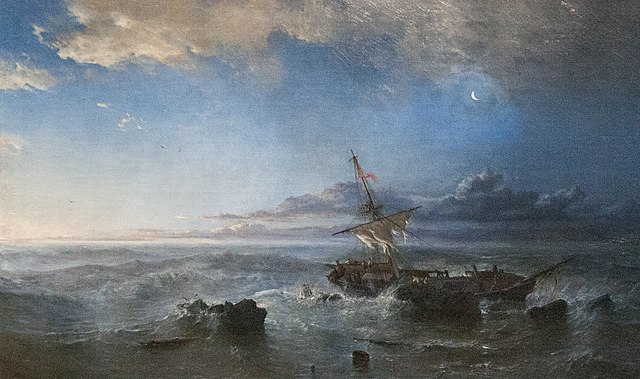
To be shipwrecked[1] is a language Paul deploys to Christians to have derailed from the legitimate course, from believing what God has shown and told them, but adding their own or Pagan often Greek interpretation to it. So, they have departed from the faith. In contrast to our imagination, nevertheless, shipwrecks do not equal to drowning to the bottom of the sea and dying, but to needing an urgent and immediate repair so that the sail can be set again.[2] Coincidently the only other place where the word ‘shipwreck’ appears is in 2 Cor 11:25 where Paul speaks about his own physical ships being wrecked and as a result he spent a day and night drifting around the sea.
20 Among them are Hymenaeus and Alexander, whom I have handed over to Satan to be taught not to blaspheme.
그 가운데 후메내오와 알렉산더가 있으니 내가 사단에게 내어준 것은 저희로 징계를 받아 훼방하지 말게 함이니라
The name Alexander gets mentioned again in 2 Tim 4 as ‘Alexander the metalworker’. It is not certain that this is the same person but as far as their action is concerned, it would be of the same nature wrong-doing Paul’s and not Timothy’s ministry by manipulating God’s word. i.e. blasphemy. Paul’s words are harsh but in his similar words in 1 Cor 5:5 ‘hand this man over to Satan for the destruction of the flesh, so that his spirit may be saved on the day of the Lord’, but his understanding of the Lord’s treatment despite his own resentment is quite clear. Paul did not believe in the flesh and the spirit to be separate, as the Greeks did. It is one nephesh, one being. So when he says the Lord saves someone’s spirit on the Day of the Lord, he means the person’s salvation in whole.
Our Lord’s remark adds to this argument. As He said, after warning a wrong doer several times individually and collectively, ‘treat them as you would a pagan or a tax collector’ (Matt 18:17). There it is notable our Lord used the emphatic you, meaning as how they are to you someone to be neglected, despised, trampled, but implying, ‘as for me, they are someone I have come for’.
So, in whom is the Satan’s strongholds to be demolished by the divine power? Yes. It is not only in the persons we like to declare as defects but also in ourselves who desire to declare them further to damnation unlike the Lord’s will. This is the shipwreck that needs immediate reparation by the mercy of our almighty God who turns the dead to life. Amen.
Lord! Your word makes us small and humble. We think we are upright but the moment we think so we have tripped over. Lord, have mercy on our hearts that love to make myself look right and not only that, love to belittle others. Let us know your heart who cancels the debt we are not able to pay. Let us live with the message that the debt is cancelled. Let us not secretly go round and collect the debt, as if it is still owed. Let us be your good, listening servants so that with or without knowing, let us not blaspheme you, in any way or any means. Let us know your mercy that calls us faithful despite our such weakness. Thanks be to our Lord God.
Image: Paul Jean Clays (1819–1900), The Day after the Shipwreck, 1853. Museum of Fine Arts Ghent (MSK). Public domain.
[1] ναυαγέω (nauageō) ‘be shipwrecked’ (G3489)
to make shipwreck, be shipwrecked, 2Cor. 11:25; 1Tim. 1:19
[2] Blomberg, Craig L., and Darlene M. Seal. From Pentecost to Patmos, New Testament Introduction and Survey Volume 2,. London: APOLLOS, 2021, 528
 Read with Ssam