The standard seems high. But not because of the persons’ profiles but because of Jesus’ profile, who is the proficient manager of the house. He makes sure God’s purpose advances despite the outward appearances of the house, whether messy or tidy. The perfect housekeeping advances the work of God, no matter how adverse or favourable the circumstances may be.
11 In the same way, the women are to be worthy of respect, not malicious talkers but temperate and trustworthy in everything.
The women are either women deacons or the wives of deacons, as the NIV footnote says. The original Greek word for the NIV’s ‘malicious talkers’ is a harsh one: it means devilish or the Devil.[1] This intentional extreme word is used to make an explicit reference to the Artemis prophetesses, who are far from holding ‘the mystery of faith (ESV)’ or ‘the deep truths of faith (NIV)’ mentioned in v. 9.
The mystery of faith involves beneficiaries coming to know and confessing themselves as blameful sinners and the Benefactor honouring them as ‘blameless’, ‘there is nothing against them’ (v. 10). This is the foundational factor that decides who the person is, whether a male or female leader, their spouse, or any believer, and what attitude they thus come to adopt, not only in church matters but ‘in everything’.
It also reminds us of Jesus himself’s harsh talk against the Pharisees, saying that their father was the devil (John 8:44), because they would not do what God, whom they claimed as their Father, desired for them, which was to love the Son. On the contrary, they desired to kill him. So people who are not devilish would be those who love the Son, who presents them as blameless before God despite their devilish inclinations. This is the truth they hold on to.
12 A deacon must be faithful to his wife and must manage his children and his household well.
As discussed in vs. 2–7, this person of high, pure, and noble faith is an ordinary person, meek and humble. In line with God’s ‘housekeeping’, such ordinary and everyday managing of the household advances ‘God’s work – which is by faith’ (1:4).
13 Those who have served well gain an excellent standing and great assurance in their faith in Christ Jesus.
Their lives might be volatile, sometimes looking successful and filled with ‘good news’ of things going well, other times filled with pain and trouble. Nevertheless, they unaffectedly boast of Christ Jesus, who advances God’s work in them no matter what the passing outward appearances might be for a season or two.
Dear Lord, thank you for the advancement of your work and your word, despite what we as individuals may be going through personally. We boast of you, who hold fast on to us so that we may not lose faith and fall back to being the children of the devil. Dear Lord, let us be who you make us to be, as you have declared us to be blameless despite all that has happened or will happen to us. We marvel at and revere you for your power, which can save us from anything in the world. Let us remember you and take comfort in your perfect housekeeping. Let us thank you and live today as your true, legitimate beneficiaries. Praise be to our Lord God.
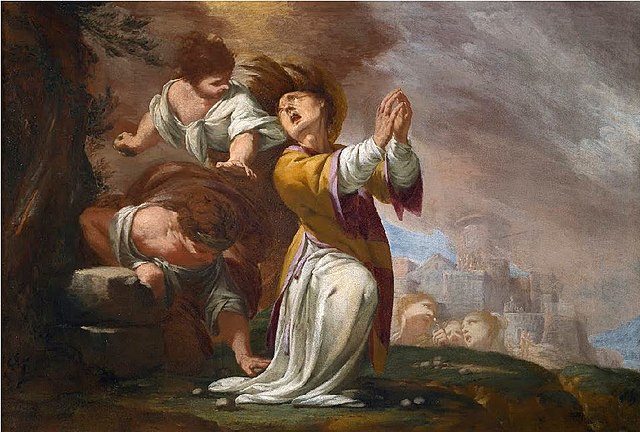
Image: Stoning of Saint Stephen by Giovanni Battista Lucini – https://artsandculture.google.com/asset/martyrdom-of-st-stephen/twGNCf3waLKDvA, Public Domain, https://commons.wikimedia.org/w/index.php?curid=68961694
[1] διάβολος (diabolos) ‘devilish/the Devil’ (G1228) devilish, malicious, slanderous; as a noun, the devil; Satan, or a wicked person who is like the devil
slanderer, 1Tim. 3:11; 2Tim. 3:3; Tit. 2:3; a treacherous informer, traitor, Jn. 6:70; ὁ διάβολος, the devil
 Read with Ssam