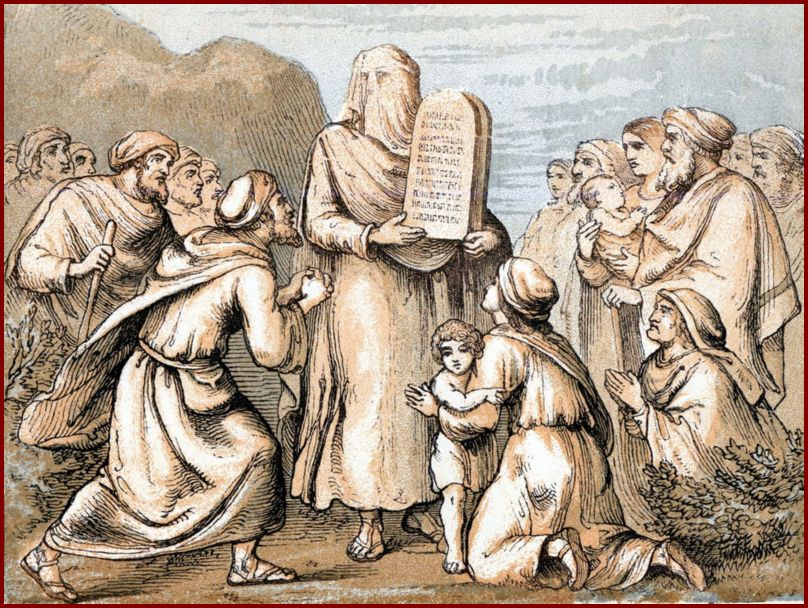
Godliness does not come from extravagant outward performance but from being acted upon by God. In the case of Moses, for exmaple, it is not the shining rays that radiate from his face, which happened to wither off later on, but God’s word being given to him. As Paul rounds off the household conduct for believers, he emphasises the source of believers’ godliness, which precedes the manifestation itself.
14 Although I hope to come to you soon, I am writing to you with these instructions so that,
In Paul’s writing, the concept of ‘surely coming but being delayed’ is seen a lot. Although he is talking about his own visit to Timothy, it must be an educational exemplar to teach believers about the idea that delay does not lead to cancellation, or in some cases, even if his own plan might get cancelled, our Lord’s does not at all. It surely comes to pass and is therefore something to long for all the more.
15 if I am delayed, you will know how people ought to conduct themselves in God’s household, which is the church of the living God, the pillar and foundation of the truth.
God’s household is the church of the living God. It is not the building but the congregation of believers who are holders of the truth in the middle of a world where falsehood prevails. As the holder of such truth, the code of conduct until the delayed coming back of Christ is realised at last is to live the truth: God’s desire for all people to know the truth in the meantime (2:4).
16 Beyond all question, the mystery from which true godliness springs is great:
He appeared in the flesh,
was vindicated by the Spirit,
was seen by angels,
was preached among the nations,
was believed on in the world,
was taken up in glory.
The first verb is translated as active, ‘appeared’, but as the ESV (‘was manifested’) and NASB (‘was revealed’) have it, it is also passive, starting off the series of six aorist passive verbs. They summarise ‘the mystery of godliness’, which the NIV paraphrases rather extensively as the ‘mystery from which true godliness springs’. The original does not have ‘true’ there, but this could be seen as the translators’ endeavour to link the ‘godliness’ with the ‘truth’ in the previous verse, as opposed to the deifying according to the falsehood, as prevalent it was in the temple of Artemis.
The mystery of godliness revolves around Christ Jesus, the essence of truth, in whom we ‘gain excellent standing and great assurance in our faith’ (v. 13). Godliness is mysterious in that it does not come from acting and believing ourselves to be gods, but from revering and marvelling at the work of God. In that sense, the mystery of our Christ is indeed great: He is God himself, but he remained the patient of God’s actions,[1] fully and gladly submitting himself to the Father, as the consecutive passive verbs indicate.
Lord, thank you that you are our Father who initiates and acts on your will. There is nothing good or holy inside of us, but just by looking at you and marvelling at your work, the holiness and goodness are imputed to us. This is a mystery. A revealed mystery through Christ. It is unbelievable that we believed this mystery. If it were not for the Holy Spirit, we would not have believed. Dear Lord, our God, even when we do not know how to behave in your church, let us always go back to our Christ’s attitude in revealing your desire. Let us not chase after falsehood but remain your patients now and forever. Great is your name!
Image: Moses Veiled, A Beautifully Illustrated Antique Bible Reading Book of the Old Testament. London: Society for Promoting Christian Knowledge – Published 1880, page 35.
[1] Patient 2. LINGUISTICS the semantic role of a noun phrase denoting something that is affected or acted upon by the action of a verb. Definitions from Oxford Languages
 Read with Ssam