Do you have a training schedule? How do you keep your body fit? Today’s passage is about keeping your mind fit, which Paul claims is more beneficial than bodily training.
6 If you point these things out to the brothers and sisters, you will be a good minister of Christ Jesus, nourished on the truths of the faith and of the good teaching that you have followed.
A good minister does not only teach good things, but they themselves are also nurtured and fostered by the same things. The latter has to come first—not only for ministers but for all believers.
7 Have nothing to do with godless myths and old wives’ tales; rather, train yourself to be godly.
Nothing against being ‘old’ or ‘wives’, but this is again to say that things turn into myths if God’s purpose (trustworthy saying no. 1 in 1:15) is missed out. It is then no different from what the Artemis prophetesses hold up.
Then what would be the right way to train oneself to be godly? It is the opposite: understanding and re-understanding God’s purpose through Christ and his working until now through the Spirit. Thus thoroughly relying on Christ’s means of saving us, his forgiveness, and being credited with his merit (trustworthy saying no. 2 in 3:1). Accepting the Holy Spirit’s telling us the good news that this has been done and not shaking from it!
8-9 For physical training is of some value, but godliness has value for all things, holding promise for both the present life and the life to come. This is a trustworthy saying that deserves full acceptance.
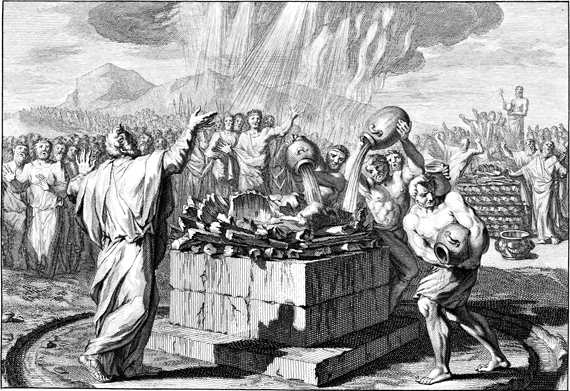
As with these previous trustworthy sayings, Paul declares the third because what the false teaching promotes is significantly different. They promote ‘physical training’, which is nothing like going to the gym, which does have some value, and they did have many athletes training their bodies in Greek-Roman times. But the kind of physical training false teachers promote would be abstaining from things, forcing outward performances, etc., which reminds me of how Baal’s prophets wailed, danced, and even slashed their bodies, calling upon their god on Mount Carmel (cf. 1 Kings 18:16–29). If there’s anything in us that even faintly resembles it, we must stop immediately and repair.
10 That is why we labour and strive, because we have put our hope in the living God, who is the Saviour of all people, and especially of those who believe.
Many modern New Testament scholars thankfully investigated, debated, and concluded that the Greek word translated as ‘especially’ rather means ‘namely’,[1] assuring that there is only one and the same salvation for all who believe.
Dear Lord, thank you for your Word on this Lord’s Day. We mean to serve and worship you well. But if there is anything in us that rather serves my satisfaction, have mercy upon me, Lord. Please stop me and repair me, as you have promised me to be blameless and holy before you. Let me be spotless in your eyes, all because of Christ’s deed. Let me come out like pure gold, totally and fully indebted to his forgiving me and making me right alone.
Image: Contest at Mount Carmel, engraving by Otto Elliger, public domain, via Pitts Theology Library, Emory University.
[1] Blomberg, Craig L., and Darlene M. Seal. From Pentecost to Patmos, New Testament Introduction and Survey Volume 2,. London: APOLLOS, 2021, 541
 Read with Ssam