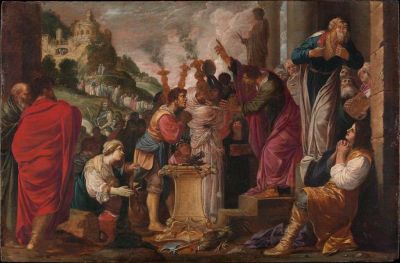
2026.4.19 주일 설교
[인트로]
루스드라에서 일어난 기적은 사람들을 하나님께로 이끄는 대신, 오히려 눈에 보이는 일과 종교적인 반응으로 향하게 했습니다. 하나님께서는 오늘날에도 때때로 우리에게 기적 같은 일들을 허락하셔서, 도저히 일어날 수 없으리라 생각했던 일들이 실제로 이루어지게 하시기도 합니다. 그 모든 일을 허락하시는 분이 하나님이실진대, 그렇다면 우리는 그 앞에서 어떤 반응을 보여야 할까요? 우리는 흔히 한 번의 기적이 더 큰 기적을 부르고, 그것이 우리 안에 반복되고 자리잡기를 바라기 쉽습니다. 그러나 오늘 말씀은 오히려 우리에게 기적 앞에서 “헛된 일을 버리라”는 도전을 줍니다. 하나님께서 먹을 것을 주시면서, 사람은 말씀으로 사는 줄 알아야 한다고 하셨던 말씀이 떠오릅니다. 이러한 역설적인 하나님의 인도하심 앞에서, 우리는 과연 순종하는 마음으로 헛된 일을 분별하고 버릴 수 있을까요? 성령께서 지혜롭게 비추어 주시기를 구하며 말씀 앞에 섭니다.
The miracle at Lystra did not lead people to God; instead, it drew them toward what was visible and toward religious reaction. Even today, God sometimes allows events that seem miraculous, things we thought could never happen actually to come to pass. If God is the one who allows all these things, then how should we respond before Him? We often tend to hope that one miracle will lead to a greater one, and that such things will be repeated and become established among us. Yet today’s message instead confronts us with the challenge to “turn away from futile things.” It brings to mind the word that, while God gives us food, man must know that he lives by the Word. Before such paradoxical guidance from God, can we truly, in a spirit of obedience, discern and cast away what is futile? We stand before the Word, asking the Holy Spirit to illumine us with wisdom.
1. 먼저 이번 주간 어떻게 지냈는지, 좋았던 것과 힘들었던 것을 돌아가면서 나누어 보세요.
2. 성경 본문과 아래 설교 마지막 부분 발췌를 다시 읽어보세요.
17. 그렇다면, 그 기적 앞에서 우리는 무얼 해야 한다는 것입니까? 첫째, 복음을 전해야 하고, 둘째 헛된 일을 버려야 하는 것입니다. 그리고, 셋째, 천지와 바다와 그 가운데 만물을 지으시고 살아 계신 하나님께로 돌아와야 하지요. 이것을 소위 바울 종교라고 부르는 것입니다.
22. 여러분, 기독교회의 예배를 지배하는 것이 무엇입니까? 바로 이런 절차와 형식과 예절이지요. 중요하지 않다는 말은 아닙니다. 정작 주목해야 할 “믿음”이 “행한 일”에 밀린다는 것이지요. 그런 체면이 우리의 겉으로 드러나는 행동을 규제하고 절제시키고 있는 것입니다. 소위 엄숙주의가 그런 것이지요.
23. 더 그만 두어야 할 것이 있다면, 이러한 형식 속에 자리잡고 있는 루스드라 사람들의 그 종교성일 것입니다. 어떤 종교성이냐면, 불가능한 일이 가능하게 되거나, 무슨 기적이 있을 때, 그 속에서 자기들이 섬기는 신들을 찾으려는 것이지요. 또는 그 반대로 그 신이 그런 기적들을 자기들에게 베풀어 주실 것을 기대하는 것입니다.
28. 교회를 교회답게 하고, 또 교회를 참된 교회로 보이게 하는 것은, 그런 기적도 아니고, 또 그런 예전도 아닙니다. 교회는 바울이 전한 그 복음, 곧 하나님의 말씀 만이 있는 곳이지요. 그래서 그 말씀이, 인간이 고안한 여러가지 예절과 도덕과 형식을 파괴하고 있는 곳을 말합니다.
17. Then what should we do in the face of such a miracle? First, we must preach the gospel. Second, we must turn away from futile things. And third, we must turn to the living God, who made the heavens and the earth and the sea and all that is in them. This is what may be called Paul’s religion.
22. What governs the worship of the Christian church? It is precisely these procedures, forms, and etiquettes. This is not to say they are unimportant. But the problem is that the “faith” we ought to focus on is pushed aside by “what is done.” Such outward form controls and restrains our visible behavior—what we might call formalism.23. If there is something more that must be abandoned, it is the religiosity of the people of Lystra embedded within these forms. What kind of religiosity? It is the tendency to look for their gods within miraculous events—when the impossible becomes possible—or, conversely, to expect that their god will perform such miracles for them.
28. What makes the church truly the church is neither such miracles nor such rituals. The church is the place where the gospel Paul preached—the Word of God—alone is present. It is the place where that Word breaks down the many forms, moralities, and structures devised by human beings.
3. 설교 중 특히 아래 단락에 관련하여 다음 질문을 생각해 보세요.
- 나는 눈에 보이는 결과에 더 집중하고 있습니까, 아니면 하나님 자신에 더 집중하고 있습니까? Do I tend to focus more on visible results or on God Himself? How can I tell?
- (의도하지 않았지만) 교회의 형식이나 전통, 기대들이 나의 믿음을 대신하고 있는 부분이 있다면 어떤 것입니까? “In what ways can church forms, traditions, or expectations unintentionally replace faith in my life?”
- 우리 교회 또는 교회로서의 ‘나’를 참된 교회로 서게 하기 위해서 버려야 할 것이 있다면 어떤 것이 있을까요? 구체적으로 어떻게 버릴 수 있을까요? Which things can I throw away so that our church or I, as a church, stand as a true church? How can I throw them away in pratical terms?